
From Frogspawn to Forest Friends: Our Tadpole Tale
Rescuing the Frogspawn
Over the past few months, our Forest School sessions have been filled with excitement as we followed the full life cycle of a frog, up close and in real time.
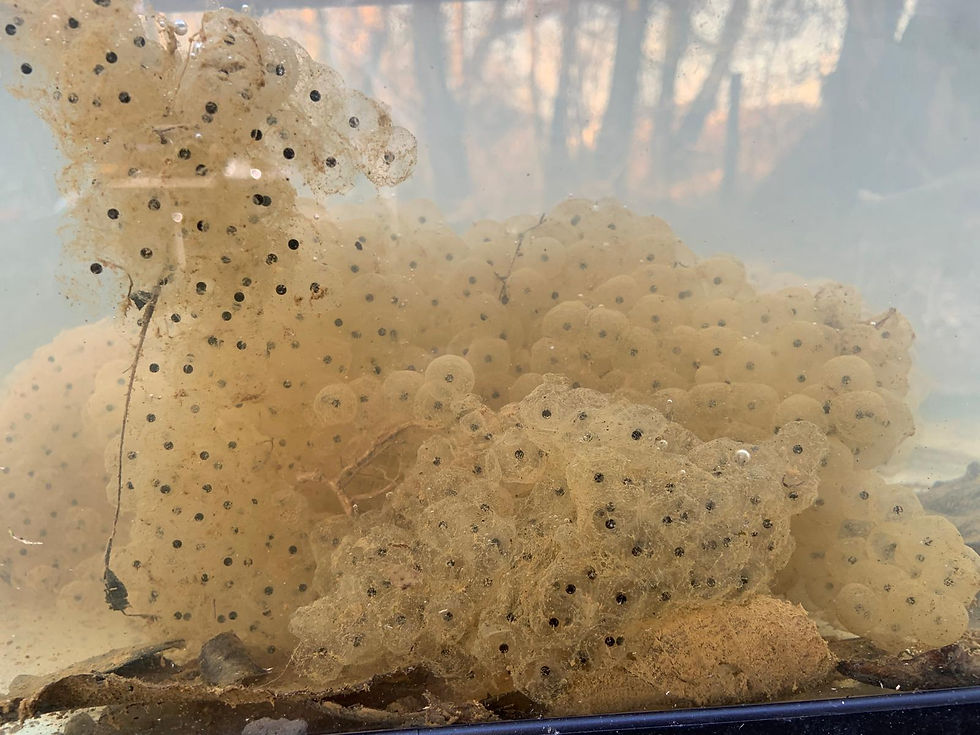
We discovered a large batch of frogspawn in an unlined pond that was quickly drying up. If we’d left it there, it’s likely they wouldn’t have survived. Thankfully, Gemma, our founder and a qualified ecologist, knew exactly how to care for them. With the right food, environment, and expert guidance, the frogspawn was safely nurtured all the way to froglet stage.


A Metamorphosis in Motion
Frog development is nothing short of magical. It all starts in early spring when adult frogs lay hundreds of tiny jelly-coated eggs (known as frogspawn) in still or slow-moving water.
Here’s how the journey unfolded during our sessions:
Stage | What We Saw | Biology |
Stage 1 - Eggs (Frogspawn) | Clusters of jelly-like black dots floating near reeds | Frogspawn usually hatches in 1-3 weeks, depending on the temperature. |
Stage 2 - Tadpoles | Tiny wriggly creatures swimming around | Tadpoles use gills and tails to breathe and swim, feeding on algae and plants. |
Metamorphosis | Back legs appeared first, then front legs | Over several weeks, gills and tails were absorbed and lungs developed. |
Stage 3 - Froglets | Mini frogs hopping around the pond | Now able to breathe air and explore life on land, a complete transformation. |
Why This Matters for Children
Seeing the frog life cycle play out in real life, rather than on a screen or in a book, is an experience children never forget. These kinds of hands-on encounters with nature:
Spark natural curiosity and wonder
Support emotional wellbeing through calm, outdoor play
Help children retain knowledge by engaging multiple senses
Foster a deeper connection to the natural world
Want to Explore Frogspawn Where You Live?
Frogspawn (jelly-like clusters of frog eggs) can be spotted in the UK as early as January, especially in the south-west. Here’s how and where to look, plus some important advice on observing responsibly:
When to Look:
Frog breeding season typically begins late January to March, moving north as spring progresses
Mild, rainy evenings often trigger frog migration to ponds
In warmer years, frogspawn has even been recorded as early as December
Where to Look:
Search in shallow, sunny ponds, ditches, or slow-moving streams
Ponds with pond plants like duckweed or water lilies are ideal
Try your local nature reserve, community garden, or even a garden pond if you have one
Spotting Tips:
Visit your chosen spot regularly from late winter to early spring
Look for large jelly-like clumps near the water’s surface
Note: Toad spawn looks different, laid in long strings rather than clumps
A Note on Handling Wildlife:
Please remember, it’s best to observe and enjoy, not interfere. Frogspawn is delicate and removing it from its environment can be harmful. If you find some, admire it, learn from it, but leave it in place so it can develop safely.


Comments